BRANDS ARE LEARNING HOW TO SPEAK TO A CHAMPION

#15
BY SOLANGE BARRAGáN
 5 minutes
BRANDS ARE LEARNING HOW TO SPEAK TO A CHAMPION
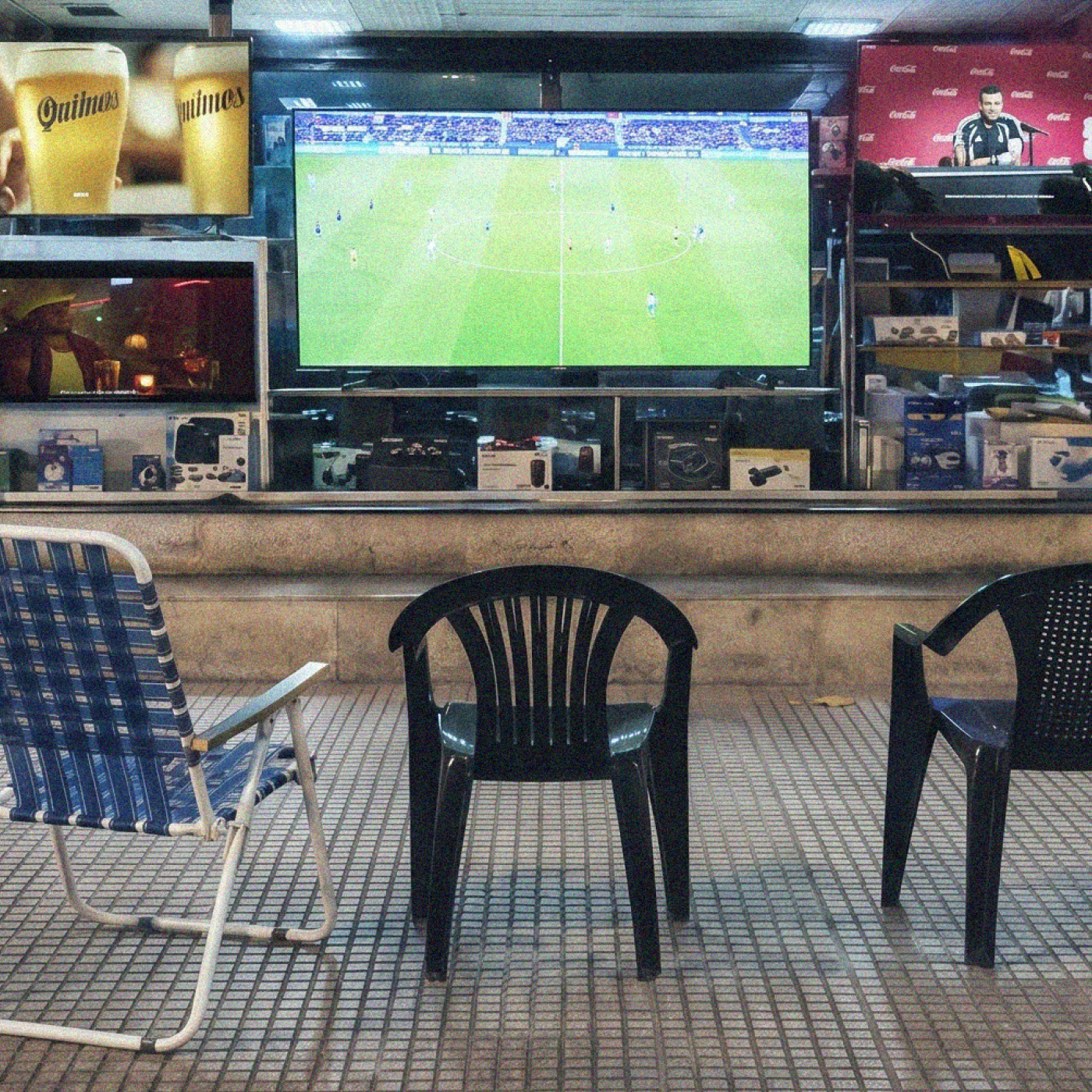
The World Cup starts in a matter of weeks, and I have no idea where my jersey is. Four years ago, I had all the match schedules memorized, knew exactly which friends would be there, and what superstitions (cábalas) couldn’t be broken.
Now, I’m writing this article less than a month away from the debut, and I still haven’t thought about where I’m going to watch it. Without overthinking it, I find myself facing a different way of loving the National Team: calmer, more confident, less desperate.
And there lies a clue to something bigger.
Because looking at the campaigns launched over the last few weeks, it’s clear to me that this isn’t just happening to me—it’s happening to all of us. Brands are telling a different story than usual. And it makes sense. Argentina arrives in 2026 with something that completely flips the narrative: it arrives with the champion’s luck.
Qatar ripped up the script
For decades, Argentine World Cup campaigns fueled themselves on the same emotional engine that drove us all: hope (ilusión), frustration, and the “this time for sure” mentality. An entire generation of commercials was built on top of that open wound. It was easier to write because it was true: every four years, we waited for a miracle.
For a long time, we were experts at managing expectations. Nobody said, “We’re going to be champions.” You had to speak in conditionals.
-
Don’t jinx it (no mufarla).
-
Don’t get cocky.
-
Take nothing for granted.
And Qatar healed that wound. We went from looking at the fixture thinking, “Could this be the one?” to “Bring on the next one.”
Faced with this, brands have a problem that—let’s be honest—is a great one to have, but it’s a problem nonetheless: How do you talk to a country that has already fulfilled its dream? How do you speak to a champion?
The campaigns currently airing seem to be different attempts to answer that very question. Some still speak the language of anticipation; others build a narrative around defending the title. Some are already daring to celebrate an identity that used to come off as arrogant. And others have realized that the World Cup matters less for what happens on the pitch and more for what happens around it.
Looking at them together is a great way to understand how the Argentine football narrative imaginary—man, what a mouthful—has changed.
Quilmes: the language of hope
CoRazones para creer (Co-Reasons to Believe), developed by Draftline and directed by Andy Fogwill and Matías Moltrasio, revisits a territory every Argentine knows inside out: faith. The campaign brings together feats, coincidences, memories, and collective gestures to show that, for Argentines, nothing is impossible.
What’s interesting is that Quilmes continues to work within a code that was the beating heart of Argentine World Cup advertising for years: believing. Believing once again works incredibly well when there is still something left to conquer. And even though we are no longer waiting for a new World Cup title after a 36-year drought, there is still a challenge capable of fueling that hope.
It’s not a bad approach. But it also exposes something deeper: the narrative transition is still underway. Some brands are still writing from the perspective of the one who waits. But the country, in a way, has already moved on.
Coca-Cola: the verb of transition
Coca-Cola’s global campaign, Bubbling Up, bets on universal emotions and codes recognizable in any market. But in Argentina, they decided to do something different. In Conferencia (Press Conference), a commercial directed by Andy Fogwill alongside Grey Argentina, Lionel Scaloni delivers a line that seems to sum up the new emotional state of both the squad and the entire country:
“We are not going to win it. We are going to defend it.”
Thus emerges a verb that would have sounded bizarre in any campaign ten years ago: defend. It’s not a verb from the era of pure hope; it’s a verb from the post-Qatar era.
Both brands represent two different stages of the same process: Quilmes is still working on faith, while Coca-Cola is already working on responsibility. One speaks to the country that dreamed so much of becoming a champion; the other speaks to the country that knows it is a champion.
This opens the door to the next stage: a brand that no longer talks about hope or responsibility, that casts aside all caution, and embraces the new personality—that of the champion. It doesn’t tell us what we want to be; it shows who we are and how the world sees us.
Fernet Branca: the champion’s code
Somos insoportables (We Are Unbearable), developed by Zurda Agency, takes a long-standing truth from popular culture and turns it into a banner: Argentines are unbearably intense when it comes to football. The campaign doesn’t try to soften this trait; it celebrates it. And that’s where something new emerges.
There is no nostalgia for what’s missing, nor anxiety for what’s to come—there is pride. A pride that, at times, is exaggerated, uncomfortable, and over-the-top. It makes us all affirm that classic sentiment: the reigning world champion does whatever they want. The sense of impunity that Qatar gifted us.
If Coca-Cola is narrating the transition, Fernet Branca is already speaking from the other side—from an identity that requires no justification. And it does so with a different language, closer to memes, the internet, and everyday banter than to the grand epic narratives of traditional commercials. It moves so naturally within those codes that it ends up looking like just another organic expression of Argentine football culture.
Uf, what a great way to sum up exactly who we are.
Grido: the ritual matters more than the event
While Quilmes, Coca-Cola, and Fernet Branca showcase different ways of talking to the champion, Grido completely shifts the spotlight, going a step further to address the World Cup as a shared ritual. In partnership with the agency Lanzallamas, they chose a different path: announcing they would fly an Argentine living abroad back home so they could experience the World Cup with their loved ones.
The idea is simple, and that’s precisely why it worked. It captured something other campaigns overlooked: for many Argentines, the World Cup is bigger than football. It’s the WhatsApp group that springs back to life after months of silence. It’s the dinner table getting bigger. It’s hugging a total stranger.
And Grido wasn’t the only one who got it; they opened the door for other brands to join the experience online:
-
Aerolíneas Argentinas provided the flight ticket.
-
PAX Assistance threw in a travel insurance policy.
-
TCL supplied a TV.
-
Big Pons even pitched in burgers for match days.
All of this happened on X (formerly Twitter), all in the same thread, all replying to the original post. No formal alliance. No joint promotion. No complex corporate architecture behind it. It happened simply because the idea connected with something culturally relevant: a shared feeling. Grido didn’t try to hijack the conversation; they created the space for the conversation to happen.

Well, writing this has actually given me goosebumps, and the anxiety is starting to creep in. Perhaps, hidden among all these narratives, lies the key to this new era. Because if the third star forever changed the story we tell ourselves about winning, it also changed the way brands speak to us.
And this is the first World Cup where everyone is trying to answer the exact same question: How do you speak to a champion?
Solange Barragán
Copywriter