THE END OF THE GUESSING GAME: WHO’S THE IMPOSTOR IN YOUT 2026 MEDIA PLAN?

#12
BY AGUSTíN SIMESEN
 5min
5min
THE END OF THE GUESSING GAME:
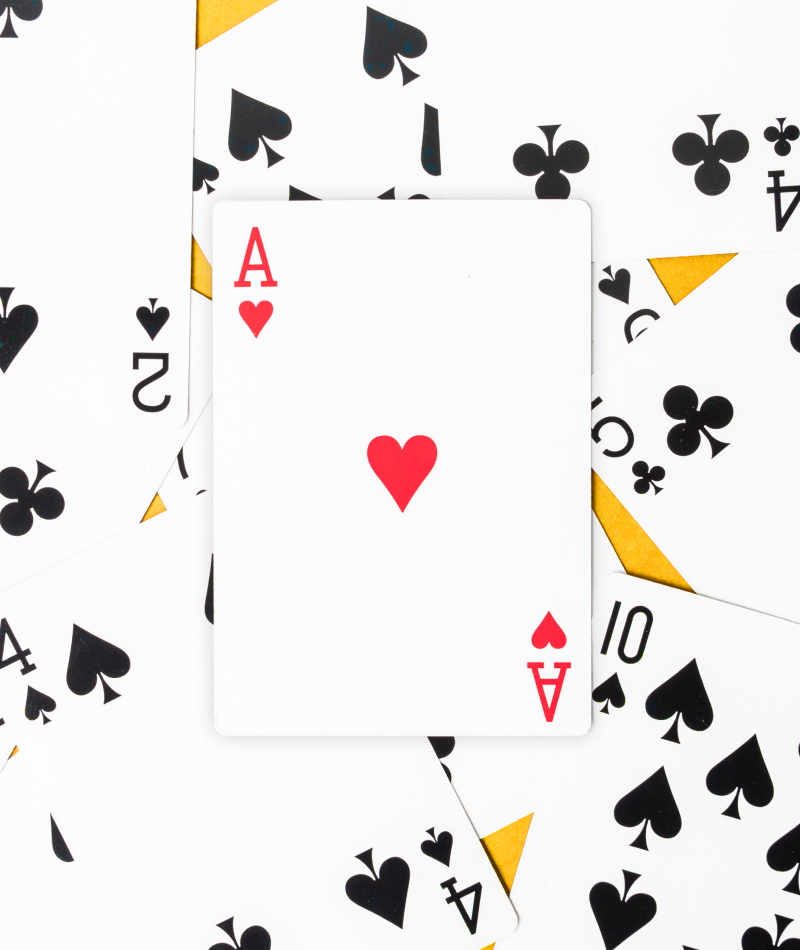
Anyone who has played Impostor with friends understands the dynamic: everyone receives a keyword—except one. The person without it must improvise answers, pick up contextual clues, and pretend to know what everyone else is talking about to avoid being exposed. For years, the advertising industry operated under a similar kind of digital mysticism.
Advertising platforms trained marketing teams to navigate a sea of probabilities, promising that their algorithms would deliver messages to the ideal consumer. Yet, much like in the game, strategies were built on proxies—signals that suggested intent but rarely guaranteed action.
The landscape in 2026 marks the exhaustion of this predictive model. Advertising is moving away from a game of chance and becoming a discipline of precision built on transactional certainty. In this new era, the market has split in two. On one side are the technological evangelists, betting on mass attention and discovery. On the other are the strategic partners who no longer need to improvise an answer because they hold the keyword in their hands: real behavioral data.
This new stage of digital advertising will be led by those capable of closing the loop between content and purchase. Platforms such as Mercado Ads and Amazon Ads, for example, have already reshaped the perception of advertising by scaling their business models and proving that an ad can become an extension of the shopping cart.
Along the same lines, the arrival of Netflix Ads and Disney Advertising adds a layer of subscription data that reveals who is actually on the other side of the screen. In the advertising game, these platforms are no longer selling views based on assumptions; they are selling verified audiences in high-attention environments, using innovative formats that close the gap between discovery and purchase—often leveraging the second screen (the smartphone) through QR codes or push notifications.
The industry’s greatest challenge—the so-called attribution gap—is equivalent to that moment in the game when no one knows who is telling the truth. This gap is now being addressed by networks operating within closed transactional ecosystems.
Unlike traditional models that must estimate whether an impression resulted in a sale, these platforms can trace the entire journey. It represents the maturity of commercial intelligence applied to business—where technology becomes invisible and gives way to tangible results and undeniable evidence.
In this new stage, advertising resembles less a race for speed and more a race for intelligence—the intelligence of the most reliable data. In an environment saturated with stimuli, the competitive advantage belongs to platforms capable of offering clarity amid the noise.
In 2026, the true differentiator will be the fidelity of information. In a context where everyone has access to the same tools, the winner will not be the one who improvises best, but the one who masters the language of certainty—understanding users through their real actions.
Agustín Simesen
Sr. Account Director