HOUSTON, DO WE HAVE A… BROKEN MULTIVERSE?

#10
BY NICOLáS CARNEVALE & ELIANA RODRíGUEZ
 5 minutos
HOUSTON, DO WE HAVE A… BROKEN MULTIVERSE?
There’s something no one warns you about when you work with brands: every single channel pulls at your sleeve, asking you to speak in its own code. And if you’re not paying close attention, they end up clashing with one another—telling different, sometimes even contradictory, versions of the same story.
Each world has its own rules, its own pace, its own way of demanding something from the identity. And in that constant adaptation, the brand can start to lose its shape. Yet users arrive expecting to encounter the same personality every time—as if they could walk in through any door and recognize it instinctively.
That—precisely that—is the new challenge of contemporary branding. The one Kantar hinted at in Marketing Trends 2025 when it spoke about “experiential omnichannel” and the inevitable leap toward unified experiences. And the same one McKinsey picks up when describing how the physical, digital, and immersive worlds are beginning to feel like variations of a single, everyday life.
Forget about playing futurist. No—that’s not the point. This is about paying attention to the agenda of the present. And there are still brands trying to catch up.
Three worlds, one identity (if you’re lucky)
Before we talk about coherence, it’s worth mentioning that every brand—no matter how small—lives across three geographies:
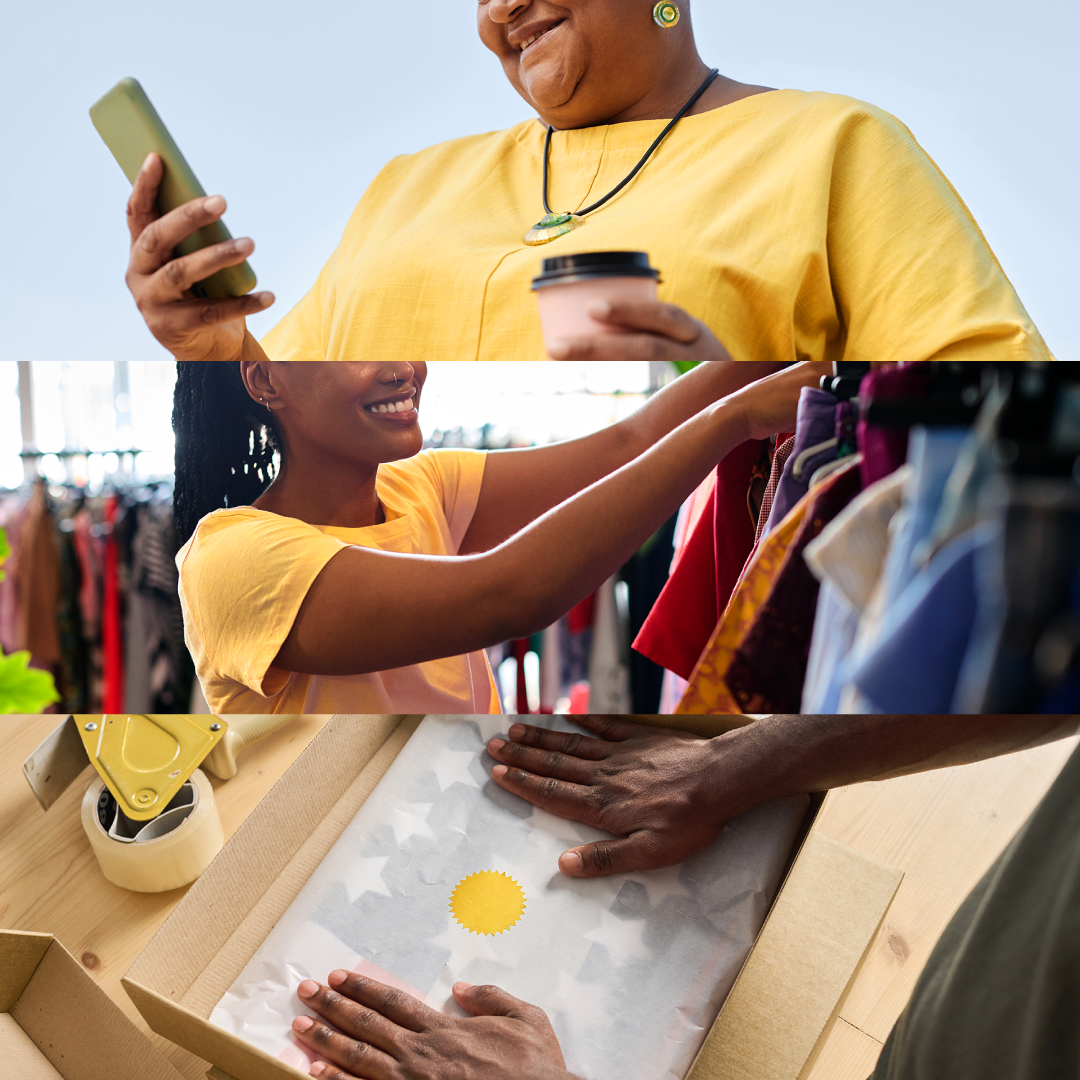
1. The physical world
The stage where identity becomes tangible: a texture that grounds you, a light that sets the pace, conceptual storefronts that tell stories, a distinctive scent, a human gesture that completes the experience.
In the physical world, the multisensory dimension rules, and every detail—from atmosphere to attitude—must uphold the same narrative.
2. The digital world
The territory where the brand breathes in real time. Websites that evolve, feeds that demand rhythm, and micro-interactions that say more than any slogan.
And one key point: the user experience, which decides whether a purchase flows or falls apart. Every design choice—from intuitive navigation to fast loading—directly shapes how the brand lives in the user’s mind.
3. The immersive world
AR, VR, 3D. Still experimental, but expanding fast. McKinsey describes this space as an environment where people “expect to participate, not watch from the outside” (from Value Creation in the Metaverse). And participating means the brand must stay true to its identity even when it stops being flat.
Each world imposes its own rules. But if each one feels like it was designed by teams who don’t even say hello to each other… Houston, we have a broken multiverse.
When the brand fractures (even if no one admits it)
There are visual disconnects that jump out immediately:
A refined packaging, but a website that looks like a different business.
A minimalist store and chaotic social feeds.
A futuristic AR environment that has nothing to do with the real product’s visual universe.
No need for examples; we all see them every day. And the feeling that stays with the user is simple: “But who are you, really?”
That doubt—that tiny crack in perception—costs the brand something far harder to measure than any digital metric. Guess what? Yes: trust.
The rules of visual traffic
(Not laws, but they keep the brand from getting lost along the way)
After mapping many visual universes at VEO Branding Company, these are the guidelines that always work:
1. The visual core is non-negotiable
Lead color, primary typeface, graphic mark: the identity triangle that shows up without asking permission. If it’s not recognizable, the user feels like the protagonist of the story has changed.
2. Everything else can evolve
Icons, animations, texture, volume, visual rhythm. Each world demands its own adaptation—without erasing the DNA.
3. The narrative must flow
If the user moves from store → website → immersive experience, the transition should feel like: “Of course, this is still the same brand.”
And if there’s even a moment of doubt… the identity needs an urgent tune-up.
4. Coherence is something you test, too
It goes beyond looking at metrics; it’s about observing perception. Asking internally and externally whether everything the brand does “feels like it belongs to the same universe.”
User intuition is the best benchmark in the world.
How we approach it at VEO
Eliana Rodríguez, our Art Director, always puts it this way: “When we create an identity, we’re not just imagining how it looks, but how it behaves, inhabits, and transforms the space it’s meant to live in.”
That’s the mindset. Yes. That’s the way.
That’s why, before the first sketch, we build a map of visual worlds: what stays, what evolves, how the brand breathes in each environment, and which decisions need to be safeguarded so nothing breaks in the transition.
We work under the premise that the brand travels. It jumps across screens, surfaces, formats, platforms. And our job is to accompany it without letting it lose its voice.
The pact every brand should sign
The visual identities that survive the future are the ones capable of sustaining their story no matter the world they appear in.
Physical, digital, or immersive…
If the brand changes its skin in each one, that’s no longer evolution: it’s a sign that its personality is starting to fracture.
The question is simple: Is your brand ready to be the same in every world it inhabits?
Nicolás Carnevale & Eliana Rodríguez
Copywriter & Art Director